"...when the last individual
of a race of living things breathes no more, another Heaven and another
Earth must pass before such a one can be again."
-William Beebe
 • SEARCH ALBC
Santa Cruz Sheep
 Santa
Cruz sheep are named for Santa Cruz Island, one of the Channel Islands
off the coast of California. Sheep have been on the island for at least
70 years and perhaps as long as 200 years. Local lore suggests that sheep
were moved onto the island in the early 1800s. Ranching operations on
the island included sheep, possibly Merino and Rambouillet types. Some
of these animals escaped and a feral population was established. Over
time, the Santa Cruz breed developed, through the geographic isolation
of the population and the pressures of natural selection.
Santa
Cruz sheep are named for Santa Cruz Island, one of the Channel Islands
off the coast of California. Sheep have been on the island for at least
70 years and perhaps as long as 200 years. Local lore suggests that sheep
were moved onto the island in the early 1800s. Ranching operations on
the island included sheep, possibly Merino and Rambouillet types. Some
of these animals escaped and a feral population was established. Over
time, the Santa Cruz breed developed, through the geographic isolation
of the population and the pressures of natural selection.
In 1978 The Nature Conservancy (TNC) acquired ownership of nearly all of Santa Cruz Island. The feral sheep population had overgrazed the island and threatened the survival of indigenous vegetation. TNC began a sheep eradication program in 1980 in an effort to save the island ecosystem from further destruction.
 The
American Livestock Breeds Conservancy convinced TNC of the importance
of the feral sheep, and the two organizations agreed to cooperate in a
rescue effort to conserve a portion of the population. In 1988, twelve
lambs were brought off the island by a team of Nature Conservancy and
ALBC volunteers. The sheep were placed with five California breeders and
a conservation effort was begun. ALBC member Earl Crews brought additional
animals off of the island in 1991. The mainland population has now increased
to about 125.
The
American Livestock Breeds Conservancy convinced TNC of the importance
of the feral sheep, and the two organizations agreed to cooperate in a
rescue effort to conserve a portion of the population. In 1988, twelve
lambs were brought off the island by a team of Nature Conservancy and
ALBC volunteers. The sheep were placed with five California breeders and
a conservation effort was begun. ALBC member Earl Crews brought additional
animals off of the island in 1991. The mainland population has now increased
to about 125.
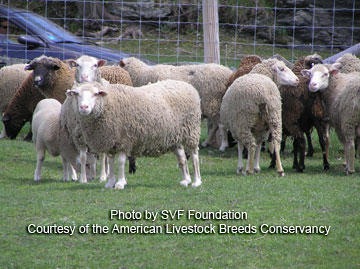
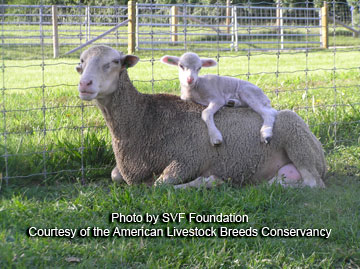
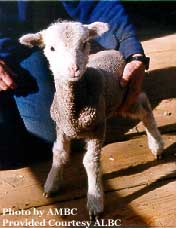
Like many other island-adapted animals, the Santa Cruz sheep are small in size. Most of the sheep are white, but black, brown, and spotted sheep are also found in the population. The fleece is fine to medium and very soft. Sheep have little or no wool on their bellies, faces, and legs, and many have short, woolless “rat” tails. Santa Cruz sheep are exceptionally hardy, with virtually no birthing problems, a high survival rate, and an ability to thrive on marginal forage.
 The
Santa Cruz Island sheep breed is an important genetic resource. Its historic
background, long period of isolation, and adaptation to a challenging
environment have given the breed an array of characteristics not found
among commercial breeds. Conservation outside of its native environment
is not ideal, because changes in selection pressure will gradually change
characteristics, but it provides the only opportunity for the breed to
survive. The American Livestock Breeds Conservancy has begun a conservation
program for the sheep, including the collection of semen from the original
island-caught rams. Semen can be used in the future if needed to reestablish
original traits.
The
Santa Cruz Island sheep breed is an important genetic resource. Its historic
background, long period of isolation, and adaptation to a challenging
environment have given the breed an array of characteristics not found
among commercial breeds. Conservation outside of its native environment
is not ideal, because changes in selection pressure will gradually change
characteristics, but it provides the only opportunity for the breed to
survive. The American Livestock Breeds Conservancy has begun a conservation
program for the sheep, including the collection of semen from the original
island-caught rams. Semen can be used in the future if needed to reestablish
original traits.
Conservation of the Santa Cruz sheep breed will require the participation of several dedicated breeders who are able to manage flock-based breeding programs and carefully observe the sheep’s characteristics. Though this type of conservation effort is not for everyone, it does have the satisfaction of protecting a truly unique genetic resource from disappearance.
Status: See CPL
For more information:
Santa Cruz Island Sheep Registry, c/o the American Livestock Breeds Conservancy,
P.O. Box 477, Pittsboro, NC 27312, (919) 542-5704, email [email protected],
web: www.albc-usa.org
| The American Livestock Breeds Conservancy | |
PO Box 477 |
ALBC is a trademark
of American Livestock Breeds Conservancy. |
Pittsboro, North Carolina 27312 USA |
|
Telephone: 919-542-5704 |
|
Fax: 919-545-0022 |
|
|
HOME About
ALBC Breed Information Calendar ALBC
Store |
|